
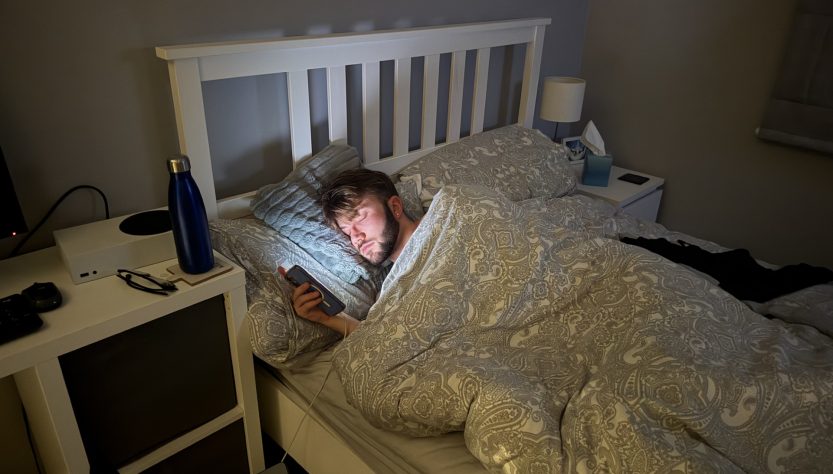
Only a quarter of Kingston University students get under five hours of sleep a night according to a recent survey by The River. Despite this, 55% of those students said they aim to get over seven hours every night.
Many of the reasons for students and their lack of sufficient sleep included stress, anxiety and balancing university work and a social life – with some respondents even looking to resort to sleep medication to catch up with zzzs.
Third-year KU architecture student, Nathan Doody, regularly finds himself awake at three in the morning due to stress and a heavy workload. “At the end of last year, my friends and I did almost two all-nighters in a row and by the end of it, I felt like I was going insane. My housemates have also come downstairs at 4 am and found me cooking my dinner on multiple occasions.”
Doody functions on around four hours of sleep during deadline weeks. This can then affect his energy and concentration levels during the day, which has a detrimental impact his university projects.
“With architecture, it’s a case where most people are staying up due to a heavy workload from their course,” said Doody. This includes a range of different design blocks which regularly become affected if Doody has had little sleep throughout the week. “My girlfriend will wake up in the morning and ask if I am still awake as it has become such a regular occurrence.”
According to Sleep Foundation, adults aged 18 and older are recommended to get at least seven hours of sleep each night. Sleep deprivation impairs mental functioning, mood changes and can lead to irregular eating habits; this symptom has affected Doody: “I fall under the category of a stress eater and not getting enough calories makes it harder to fall asleep, which is extra annoying.”

Illustration animation student at Kingston University, Tara Hughes, has also had multiple instances where she finds herself up late due to stress and university work. “Sometimes when it’s about 5 am, I can hear another housemate who hasn’t slept, and we end up chatting to each other even though we know we are going to be tired the next day.”
This could then make Hughes late for her lectures, which can make her feel incredibly disrupted. Hughes believes that “students’ houses are near busy roads, so cars, drunk people and music make it hard to fall asleep”. Another reason Hughes finds herself staying up late at night is from drinking high amounts of caffeine in the day to keep herself awake.
The River also contacted The Sleep Charity, who said: “For university students: study little and often, have a revision or homework schedule and try to get at least eight to ten hours of sleep a night.
“Have a pre-set time to when you are going to turn your screen off – plan something else you might find enjoyable before you go to bed”.
